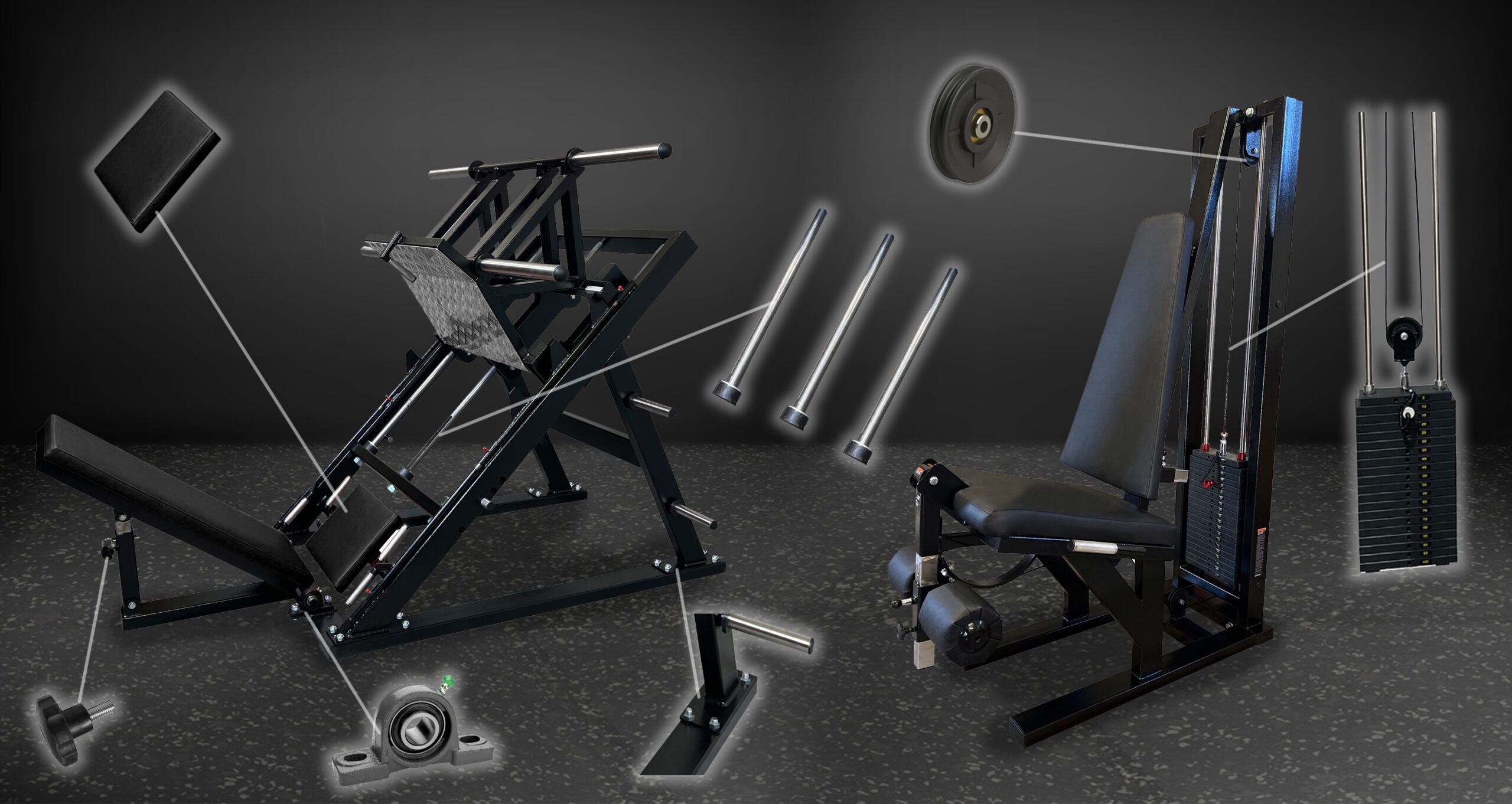
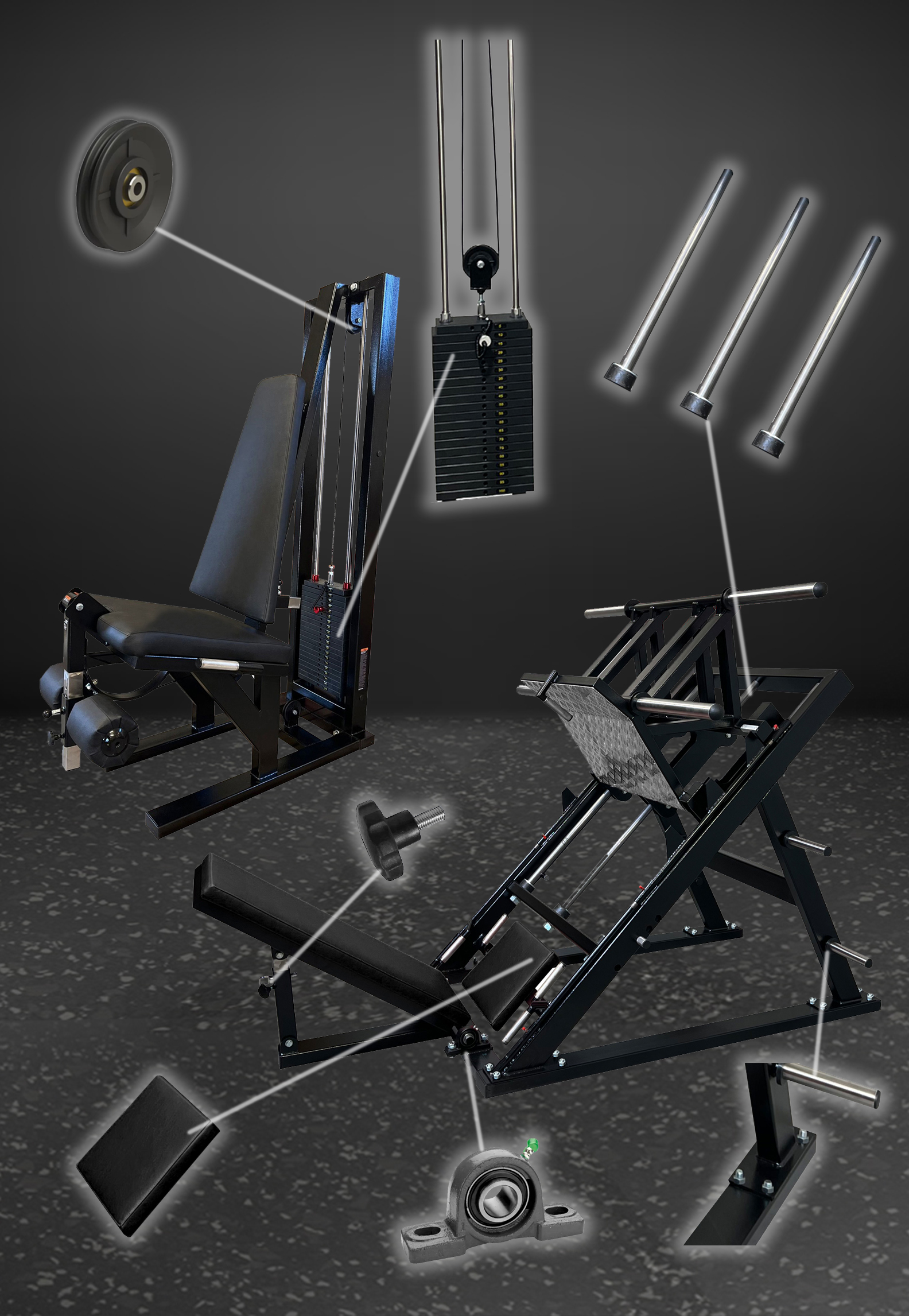
This page provides clear and practical guidelines on how to safely use the equipment, how to properly maintain it, and when to seek assistance. The goal is simple – to ensure that the equipment operates consistently, safely, and reliably throughout its entire service life.
Safe Use
The equipment must be used only in accordance with its intended design purpose and operating principle. Before starting a workout, it is recommended to: – make sure that the machine stands securely and stably, – check that all adjustment mechanisms are fully locked, – ensure that the selected position is firmly secured.
Minors should use the equipment only under the supervision of responsible adults or trainers. It is also essential to follow all warning labels and safety pictograms displayed on the equipment.
Each machine has a specified maximum permissible load. It is indicated in the product’s technical documentation and/or on our website next to the specific model.
The maximum load applies to controlled movement. Dropping weights or forcefully “slamming” platforms creates momentary loads that may exceed the nominal values. Such impacts over time may cause: – loosening of connections, – metal deformations, – increased risk of structural cracks or failure.
This is not a weakness of the equipment — it is the laws of physics.
Machines contain moving mechanisms, therefore it is essential to: not place hands or fingers into moving parts, avoid contact with the movement zone of cables or belts, and keep a safe distance from pulleys and weight stacks.
Before starting a workout, it is necessary to check that: – adjustment pins are fully inserted, – locking mechanisms are fully engaged, – platforms, backrests, or seats do not move freely.
Many machines are equipped with safety supports or safety pins. They are designed to protect users from possible pinching or uncontrolled movement of weights. When working with heavy loads (e.g., leg press or squat systems) the position of these elements must be set responsibly.
Use must be stopped if: – new or previously unusual noises appear, – movement becomes jerky or uneven, – structural instability is felt, – visible damage to cables, belts, or other components is observed.
A slight noise after a longer period of inactivity may be normal. A sudden change is a signal to check the equipment.
Basic Maintenance
Cables and Belts
Cables and belts are wear parts that naturally wear out over time.
During inspection, it is recommended to check for: - visible surface damage; - cracks or worn areas; - protruding metal wires in the cables; - damage to the protective coating.
If the surface is no longer smooth or clear damage is visible, the part should be replaced. Recommendation:check the condition of cables and belts at least once per month.
Pulleys
Pulleys ensure smooth cable movement in the machine mechanism.
During inspection, check for: - whether the pulleys rotate freely and without friction; - any unusual noises; - any side play; - any visible damage or deformation.
It is also important to make sure that the cable moves in a straight line through the pulley and does not rub against its edges.
If the pulley rotates with difficulty, makes unusual noises, or shows visible damage, the part should be replaced.
Recommendation: check the pulleys at least once every 6 months.
Connections and Bolts
Connections and bolts ensure the stability of the machine structure and the safe transfer of load.
During inspection, check for: - whether bolts are loose; - any looseness in the structure at connection points; - any visible deformation or damage.
If looseness or damage is noticed, tighten the connections or replace the damaged parts.
Recommendation: check the tightness of connections and bolts at least once every 6 months.
Guide Rods
Guide rods ensure smooth movement of the machine’s moving parts (e.g., weight stacks, platforms, or other sliding mechanisms).
During inspection, check for: - whether the rod surface is clean and smooth; - any visible damage or corrosion; - whether the movement is smooth and even.
If the movement becomes harder or uneven, the rods should be cleaned and lubricated.
For cleaning, use a soft cloth. For lubrication, apply a thin layer of PTFE (Teflon) dry lubricant. Remove excess lubricant to prevent dust buildup.
Recommendation: inspect guide rods and lubricate if needed at least once every two months.
Bearings and Lubrication Points
Lubrication points are used to lubricate bearings and other moving parts of the machine to ensure smooth operation and reduce friction.
During inspection, check for: - whether the movement is smooth and without friction; - any unusual noises; - any looseness in the mechanism connections.
If movement becomes harder or unusual noises appear, the mechanism should be lubricated.
Grease should be added through the lubrication points until it begins to appear at the edges of the mechanism. This means the mechanism is fully filled. Wipe off any excess grease.
It is recommended to use a thicker universal grease (e.g., lithium-based grease).
Recommendation: lubricate the bearings and lubrication points at least once every 6 months.
Adjustment Mechanisms
Adjustment mechanisms allow the machine position to be changed and adapted for different exercises or users.
During inspection, check for: - whether adjustment pins and locking elements fully engage in their position; - whether the adjustment mechanisms have any looseness; - whether moving parts operate smoothly.
If the adjustment mechanisms become stiff or do not lock fully, they should be cleaned and lubricated.
Threads and moving adjustment points should be lubricated periodically to ensure smooth operation and reduce wear.
Recommendation: inspect adjustment mechanisms and moving assemblies at least once every 3 months.
Upholstery and Padding
Upholstery and padding provide comfort during exercise and are in direct contact with the user.
During inspection, check for: - any cracks or surface damage; - loose seams; - excessive wear on the surface.
For cleaning, use a soft cloth, water, and mild soap. Dry the surface after cleaning.
To extend service life, synthetic leather care products can be used to moisturize and protect the surface.
Do not use aggressive cleaners such as chlorine, alcohol, ammonia, or abrasive products.
Recommendation: wipe soft parts after workouts and periodically check their condition.
Cleaning and Equipment Care
Reguliari švara padeda užtikrinti sklandų treniruoklių veikimą ir sumažina mechaninių dalių dėvėjimąsi.
Dulkės, prakaitas ir kiti nešvarumai ilgainiui gali kauptis treniruoklio mechanizmuose ir didinti trintį judančiose dalyse.
Rekomenduojama reguliariai: - nuvalyti treniruoklio paviršius ir rankenas; - pašalinti dulkes nuo mechanizmų, vedimo strypų ir skriemulių; - palaikyti švarią aplinką aplink treniruoklį.
Valymui rekomenduojama naudoti minkštą šluostę ir neagresyvius valiklius. Nerekomenduojama naudoti aukšto slėgio vandens ar stiprių cheminių valiklių.
Rekomendacija: treniruoklių paviršius valyti reguliariai, o mechanizmus periodiškai nuvalyti nuo dulkių.
Environmental Conditions
Machines are designed for indoor use in environments with suitable operating conditions.
To ensure smooth operation and long service life, it is recommended to: - place machines on a stable and level surface; - avoid long-term high humidity (recommended up to ~60%); - protect the equipment from direct water exposure; - ensure that dust and dirt do not build up in the mechanisms.
It is also not recommended to clean machines with high-pressure water or aggressive chemical cleaners.
Sudden changes in temperature and humidity may accelerate wear of mechanical parts.
Recommendation: use machines in dry and well-ventilated indoor areas.
Cables and Belts
Cables and belts are wear parts that naturally wear out over time.
During inspection, it is recommended to check for: - visible surface damage; - cracks or worn areas; - protruding metal wires in the cables; - damage to the protective coating.
If the surface is no longer smooth or clear damage is visible, the part should be replaced. Recommendation:check the condition of cables and belts at least once per month.
Pulleys
Pulleys ensure smooth cable movement in the machine mechanism.
During inspection, check for: - whether the pulleys rotate freely and without friction; - any unusual noises; - any side play; - any visible damage or deformation.
It is also important to make sure that the cable moves in a straight line through the pulley and does not rub against its edges.
If the pulley rotates with difficulty, makes unusual noises, or shows visible damage, the part should be replaced.
Recommendation: check the pulleys at least once every 6 months.
Connections and Bolts
Connections and bolts ensure the stability of the machine structure and the safe transfer of load.
During inspection, check for: - whether bolts are loose; - any looseness in the structure at connection points; - any visible deformation or damage.
If looseness or damage is noticed, tighten the connections or replace the damaged parts.
Recommendation: check the tightness of connections and bolts at least once every 6 months.
Guide Rods
Guide rods ensure smooth movement of the machine’s moving parts (e.g., weight stacks, platforms, or other sliding mechanisms).
During inspection, check for: - whether the rod surface is clean and smooth; - any visible damage or corrosion; - whether the movement is smooth and even.
If the movement becomes harder or uneven, the rods should be cleaned and lubricated.
For cleaning, use a soft cloth. For lubrication, apply a thin layer of PTFE (Teflon) dry lubricant. Remove excess lubricant to prevent dust buildup.
Recommendation: inspect guide rods and lubricate if needed at least once every two months.
Bearings and Lubrication Points
Lubrication points are used to lubricate bearings and other moving parts of the machine to ensure smooth operation and reduce friction.
During inspection, check for: - whether the movement is smooth and without friction; - any unusual noises; - any looseness in the mechanism connections.
If movement becomes harder or unusual noises appear, the mechanism should be lubricated.
Grease should be added through the lubrication points until it begins to appear at the edges of the mechanism. This means the mechanism is fully filled. Wipe off any excess grease.
It is recommended to use a thicker universal grease (e.g., lithium-based grease).
Recommendation: lubricate the bearings and lubrication points at least once every 6 months.
Adjustment Mechanisms
Adjustment mechanisms allow the machine position to be changed and adapted for different exercises or users.
During inspection, check for: - whether adjustment pins and locking elements fully engage in their position; - whether the adjustment mechanisms have any looseness; - whether moving parts operate smoothly.
If the adjustment mechanisms become stiff or do not lock fully, they should be cleaned and lubricated.
Threads and moving adjustment points should be lubricated periodically to ensure smooth operation and reduce wear.
Recommendation: inspect adjustment mechanisms and moving assemblies at least once every 3 months.
Upholstery and Padding
Upholstery and padding provide comfort during exercise and are in direct contact with the user.
During inspection, check for: - any cracks or surface damage; - loose seams; - excessive wear on the surface.
For cleaning, use a soft cloth, water, and mild soap. Dry the surface after cleaning.
To extend service life, synthetic leather care products can be used to moisturize and protect the surface.
Do not use aggressive cleaners such as chlorine, alcohol, ammonia, or abrasive products.
Recommendation: wipe soft parts after workouts and periodically check their condition.
Cleaning and Equipment Care
Reguliari švara padeda užtikrinti sklandų treniruoklių veikimą ir sumažina mechaninių dalių dėvėjimąsi.
Dulkės, prakaitas ir kiti nešvarumai ilgainiui gali kauptis treniruoklio mechanizmuose ir didinti trintį judančiose dalyse.
Rekomenduojama reguliariai: - nuvalyti treniruoklio paviršius ir rankenas; - pašalinti dulkes nuo mechanizmų, vedimo strypų ir skriemulių; - palaikyti švarią aplinką aplink treniruoklį.
Valymui rekomenduojama naudoti minkštą šluostę ir neagresyvius valiklius. Nerekomenduojama naudoti aukšto slėgio vandens ar stiprių cheminių valiklių.
Rekomendacija: treniruoklių paviršius valyti reguliariai, o mechanizmus periodiškai nuvalyti nuo dulkių.
Environmental Conditions
Machines are designed for indoor use in environments with suitable operating conditions.
To ensure smooth operation and long service life, it is recommended to: - place machines on a stable and level surface; - avoid long-term high humidity (recommended up to ~60%); - protect the equipment from direct water exposure; - ensure that dust and dirt do not build up in the mechanisms.
It is also not recommended to clean machines with high-pressure water or aggressive chemical cleaners.
Sudden changes in temperature and humidity may accelerate wear of mechanical parts.
Recommendation: use machines in dry and well-ventilated indoor areas.
Technical Support
If you have questions about the use, maintenance, or adjustment of the machines, it is recommended to contact the seller or the official distributor.
The distributor is the main contact after the equipment has been sold and can help with:
Providing advice on machine use and maintenance.
Providing technical information about the equipment.
Supplying spare parts.
If needed, coordinating technical support with the manufacturer.
When contacting for technical support, it is recommended to provide the machine model and a short description of the situation. If possible, it is helpful to include photos or a video.